
Unemployment ticked down to 4.2%, while average hourly earnings increased 3.5% year-over-year. Not too hot, not too cold… just enough to keep economists debating and the Fed reaching for another cup of coffee. ☕
Sometimes, “boring” is exactly what markets like to see.
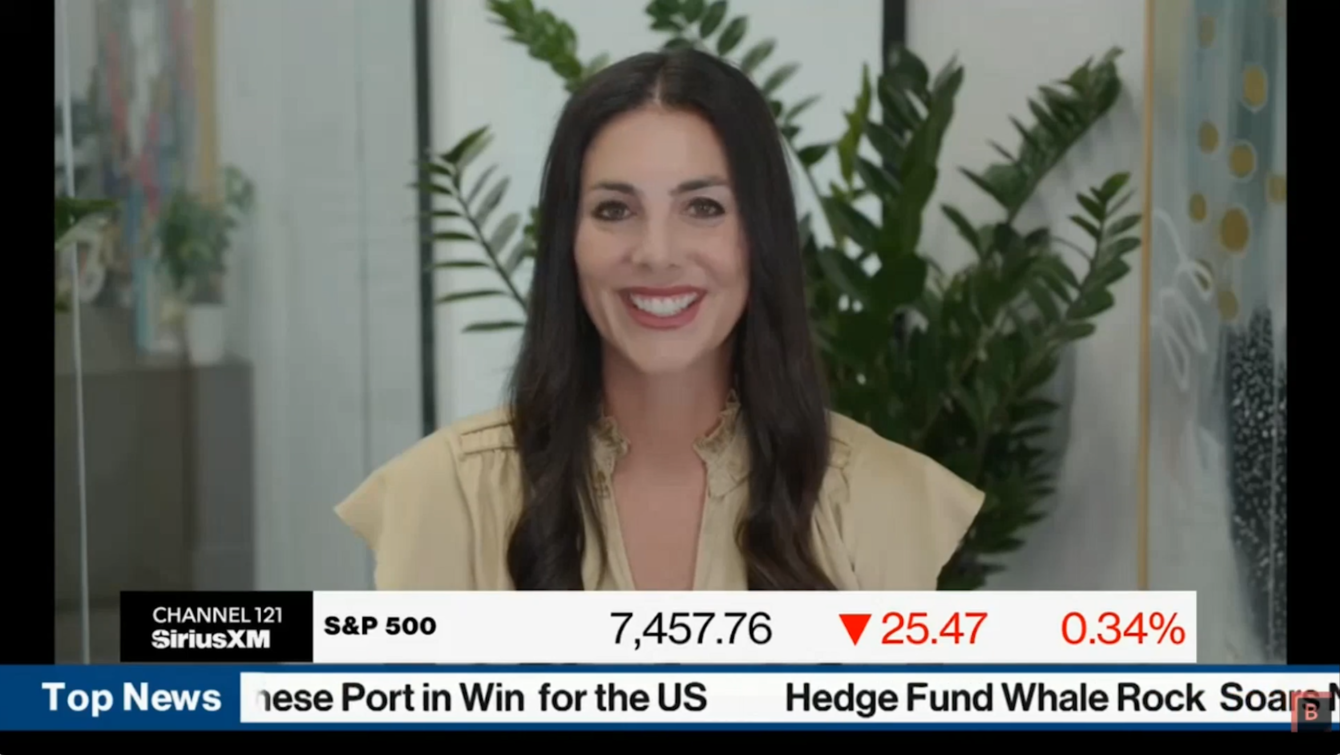
Watch Brooke’s latest Bloomberg Radio: Businessweek segment below 👇
Transcript:
Tim: I want to drive to the close, and we’re doing that with Brooke May, managing partner at Evans May Wealth, she joins us from Indiana. How hot is it in Indiana right now, Brooke?
Brooke: It’s hot. Okay. Got in my car yesterday and it said 100 degrees. I don’t know if it actually got to that level, but it’s hot and humid.
Tim: Okay. So, you’re feeling it as well, even in the Midwest.
Brooke: Oh, yeah.
What are your thoughts on today’s jobs report and the overall economy?
Tim: What are you feeling with these markets? Not just today, but the big picture that today’s jobs report told us about, really, the way the economy is going right now.
Brooke: Yeah, I know some were disappointed in today’s jobs report, but I’m not. You know, we were expecting to add 115,000 jobs. We added 57,000. But when you look at last month, we were expecting to add 80,000 jobs and we added 129,000. And job openings are 7.6 million job openings. So, there are job openings out there.
Unemployment ticked lower to 4.2%. That’s a healthy labor market. The word we keep using over and over again is “resilient,” and I don’t see that changing anytime soon.
How do you think this factors in to the Federal Reserve and interest rates?
Norah: So, how do you think this really all factors in when we think about the Federal Reserve and interest rates, as we’ve really been seeing the market trying to price in their expectations here?
Brooke: Yeah. It’s interesting. Yesterday when I looked at fed funds futures, there was about a 90% probability that the fed was going to have at least one, if not three hikes. Today after the jobs report, there was a 78% probability that we would have 1 to 3 hikes.
All that said, I don’t know that we’ll see any movement interest rates this year. When we look, you know, when we look at unemployment at 4.2%. You know, that’s not alarming from a labor standpoint. And when we look at price stability or inflation, you know, core PCE was up about 3.4% this last read, and it could tick up a little higher.
But when you’ve got average hourly earnings at 3.5%, you know, workers aren’t necessarily upside down. So, there isn’t that pressure to move in one direction or the other. We very well could stay put as long as inflation stays in this range. And hopefully ticks down, albeit it might be a grind.
Have you shifted interest rate expectations at all with the new Federal Reserve chair, Kevin Warsh?
Norah: Have you shifted expectations at all? When we think about a new Federal Reserve chair at the helm, Kevin Warsh, as opposed to Jerome Powell, are there any expectations that you guys are thinking about as it relates to whether or not the fed will continue to be dovish or hawkish, or hold?
Brooke: I do think the fed is going to remain independent. You know, there is that pressure out there and the eyes are on Warsh, you know, concerns that he might be too dovish under this administration, but I don’t see it. I think the fed is going to be data dependent. And right now, we’re in an environment where they’re not necessarily going to feel that their hand is forced to move in one direction or another.
What’s your take on investors pulling away from tech and looking towards other sectors in the market right now?
Norah: Well, when we look at the broader market, we know the S&P 500 did post its best quarter in about six years. Now that we’re moving on to the third quarter of the year, we’ve seen two back-to-back days of declines. And over the past couple of weeks, we’ve been seeing a bit of a rotation in the market.
What’s your take on investors pulling away, at least as of right now, from tech and looking toward other sectors in the market?
Brooke: I think it’d be a mistake to move too far away from tech. However, when companies do well, at some point there’s profit taking. And headlines, you know, you’ll often see, you know, causing rotation as well.
But this is a really healthy market, really healthy corporate market, or corporate environment. When we look at the beginning of last quarter, our expectation was to have 18% earnings growth. Now, we’re expecting 23% earnings growth for Q2 earnings. That’s incredible. And if we get double-digit earnings, which we very likely will, it’s going to be the seventh consecutive quarter of double-digit earnings growth.
So, it’s not just coming from the Mag 7 anymore. When you look back a couple of years, about two-thirds of earnings were coming from the Mag 7 and only a third from other areas in the market. That’s flipped. Now, we’re seeing about two-thirds of the earnings coming from the other, and only a third coming from Magnificent 7 companies.
So, that broad earnings participation is very healthy. And this is an environment where you want to be an investor and you want to really have broad exposure, not necessarily overweight or underweight to specific sectors.
What do you expect we’ll hear from Big Banks this earnings season?
Tim: Brooke, one thing that we have this season right now, because we just finished the quarter and we’ve talked a lot this week about all the superlatives of the quarter and the Sox. And what it did is now we’re going to get a view in the company’s earnings, how they did in the most recent quarter, and how they are going to think they’re going to do for the rest of the year.
Big banks are going to kick it off very, very soon. We’re, in fact, going to hear from some companies next week, even though a lot of people are going to be out of town.
How do you think earnings, how do you think we’re going to hear? I want to talk about the big banks. How do you think we’re going to hear from the big banks, especially when it comes to the consumer and the consumer health?
Brooke: Yeah, I think that, you know, right now, net interest margin should be decent.
We’re in an environment where defaults should still be pretty low, but we might get an indication of what defaults, you know, could expect to come. I think it very, you know, it’s going to vary from one bank to the next. But overall, we think banks are relatively healthy and we would expect decent earnings.
What are your earnings expectations on other companies that are set to report, like airlines?
Tim: Okay. That’s pretty good. What about from other companies that are set to report? Delta Airlines is coming out soon. It’s a good, that’s a good view, not just of consumers but it’s a higher-end consumer. But also of the way that companies are spending on travel. What do you expect there?
Brooke: You know, I think airlines, that could be tough. You know, right now they’ve got fuel costs, you know, and with fuel costs, that’s going to cut into their earnings.
So, I’m cautious on airlines. I think that, you know, without having more transparency into what that looks like, it’s not some place where I’d like to put money. But broadly, I think earnings are going to be pretty decent.
Tim: Yeah. That’s the, that’s the general rule we continue to hear from analysts, from money managers, from investors.
What would change your view on earnings expectations?
Tim: What changes your view there, though?
Brooke: What change. What would change my view on earnings?
Tim: Yeah, what would you have to hear to say, “Wait a second. This season’s not going as we thought it would.”?
Brooke: I think we’d have to see a meaningful movement in a key component, whether that be inflation, labor, regulation. You know, right now, we’re in an environment where things are pretty stable.
You know, we don’t have a lot of volatility right now and, you know, interest rates or, and the labor market. For example, right now the 10-Year Treasury it’s down about 20 basis points from its high. And I wouldn’t be surprised if we’re at this level towards year-end. So, knowing what we know today, I wouldn’t expect a big shift in earnings expectations unless we see something meaningful transpire that’s not currently in the mix.
Tim: Brooke May, managing partner at Evans May Wealth, joining us from Indiana where, yes, it is hot, even though not as under this heat dome of the northeast.